
Therapeutic Art: Re-Humanized Perspectives
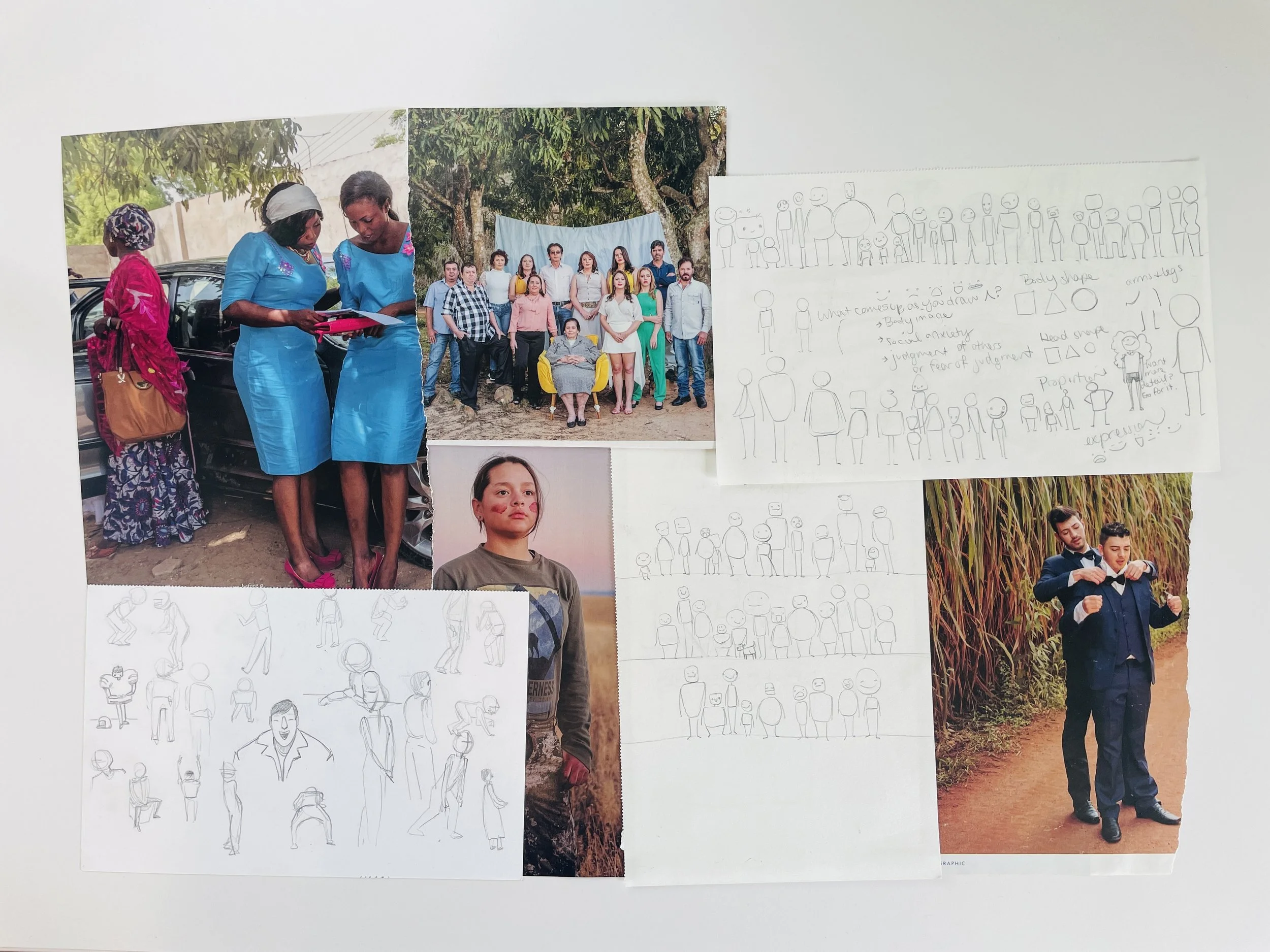
For my first therapeutic art session of 2026, I set up a time for us to refresh our ability to see goodness in others. I created the concept for this session a year or two ago, and finally—after witnessing all the horrors of each news cycle rolling through and sifting through all the anger on social media—I decided it was time. We need to relearn how to see the humanity in others. I covered the table with references: magazine clippings, a few drawings of my own, and Lego figures that my son helped pick out, anything that reinforced the theme while gently removing any potential stress that figure drawing might induce.
If you’d like to try this type of session yourself, here’s the gist:
First, I want you to assess your mindset. We regularly feel pressure to dehumanize others. Lines are drawn everywhere: socioeconomic status, political leanings, religious beliefs, etc. Today let’s try out a rehumanizing practice where we’ll work to reset our perspectives and lower the “us vs. them” barrier that blocks us from caring for our neighbors well.
How do you see the people around you? Think about your neighbors, the nice ones and the mean ones. Think about people driving along the same road and people shopping in next to you at the grocery store. Think about distant relatives, family, and friends. Think about people you see on the news, in documentaries, or online.
Being an artist doesn’t start with drawing well. It starts with seeing well. Art is a noticing practice, where we take in shape, light, shadow, depth, and turn it into an image. In today’s noticing practice, I’d like you to notice how you take in your experience of others and what comes out—words, thoughts, actions—in response.
As you’re processing:
Invite friends to doodle along with you. The more people you get involved in the project, the more perspectives you’ll get to consider along the way—getting perspective is what this project is all about, after all.
Get paper, post-its will do, and whatever pencils, pens, markers that you’ve got laying around.
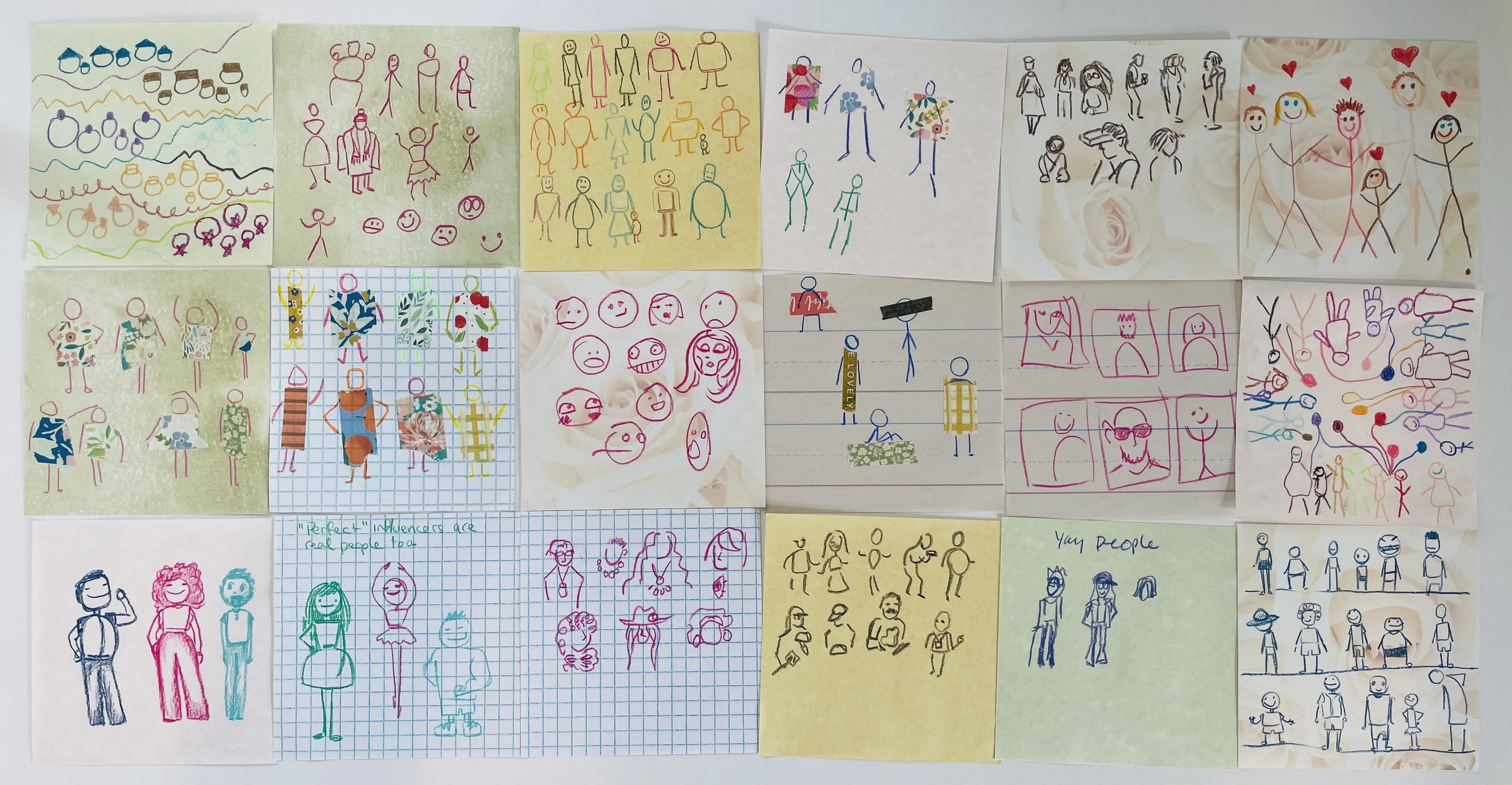
Draw as many people as you can think of, stick figures will do, and fill as many pieces of paper as you’re able.
When you have a community of scribbled little people, put all the papers together and talk it out. Who did you include? How do you feel about them? Consider what it means to value a community, and how we can see others with compassion. Patience. Appreciation. Understanding. If we want good for our neighborhoods, churches, schools, cities, etc., how do we need to alter our attitude toward the people around us?
How did it go?
When I brought this practice to my therapeutic art group, the exercise slowly devolved into hilarity. One lady at the table said she wanted to smoosh some of the little people drawings with her thumb. That was distinctly the opposite of what the exercise is for, but it was so very honest. And it was so very cathartic. I loved how free the friends around the table felt to draw silly drawings and share whatever was on their minds.
My goal for each session is to set up an activity, give it direction, and see where it goes. This means reducing performance pressure as much as possible and allowing the conversation to go directions I hadn’t planned on. My heart, I was so happy to hear from these friends that this was exactly what they experienced. Freedom, creativity, and safety.
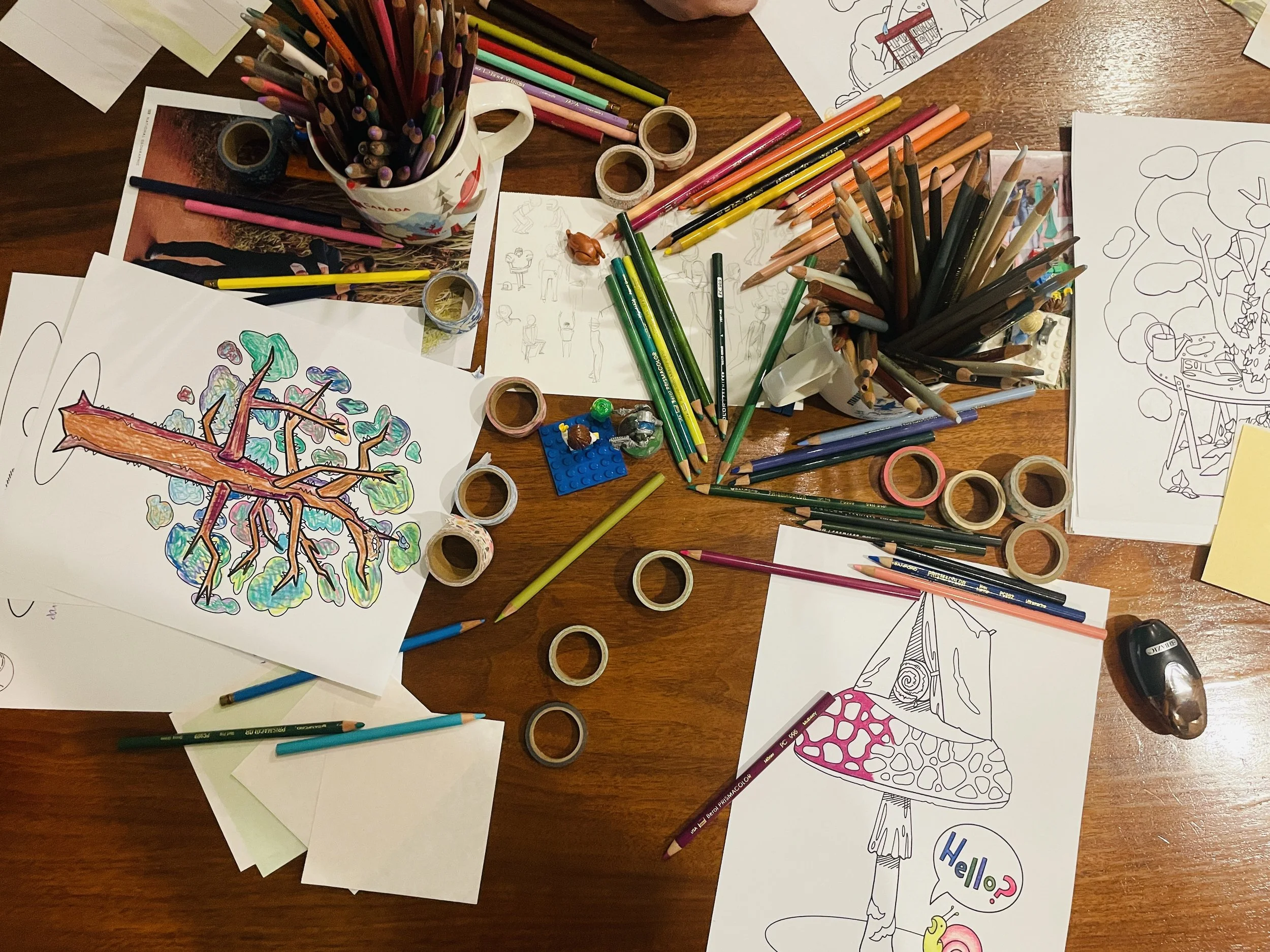
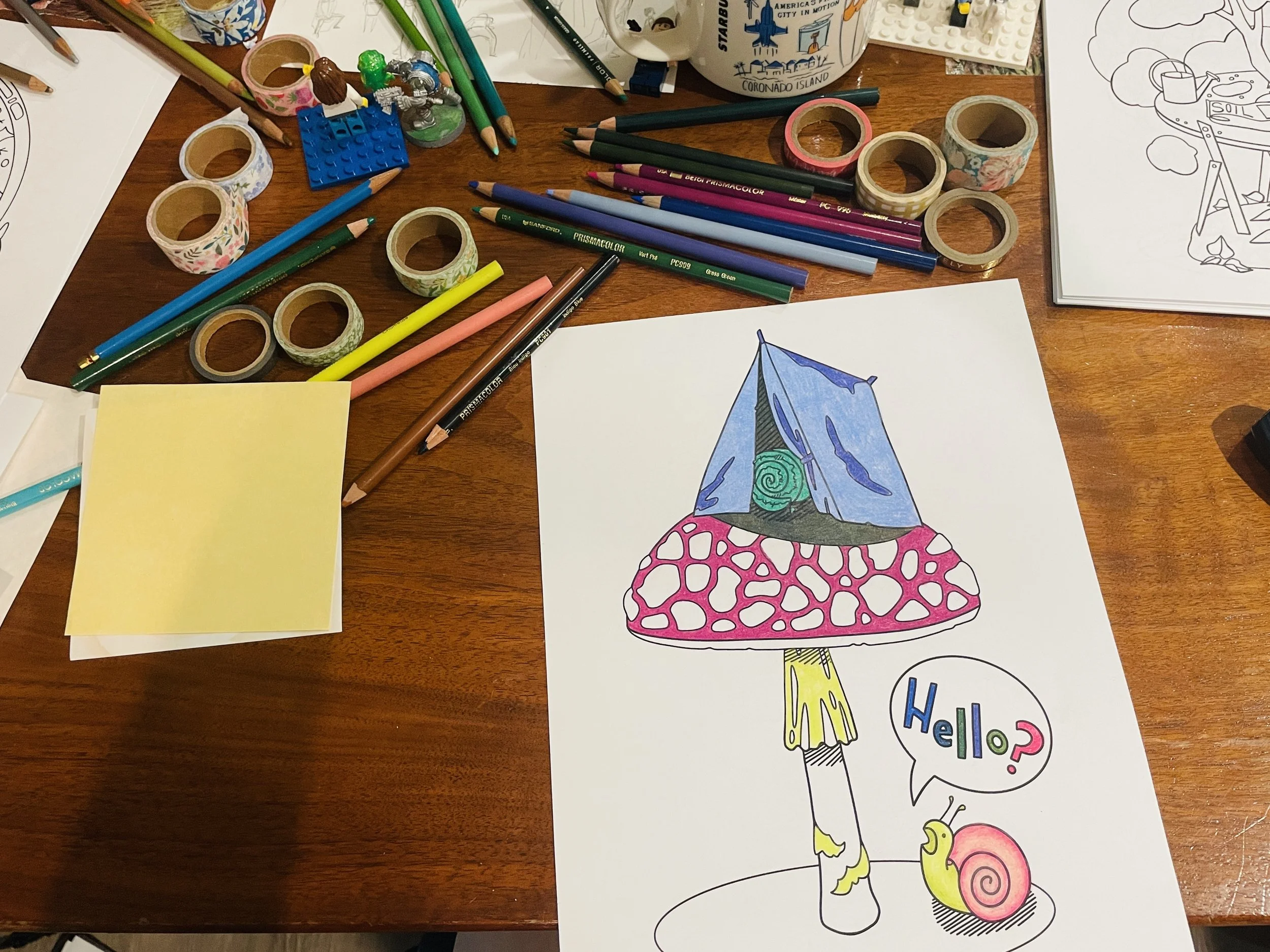
We talked a lot about self care and we enjoyed pointing out differences in how we’d drawn our little people. Eventually people ran out of drawing ideas. Hands stilled, but the conversation still had a lovely flow. I pulled out coloring pages from my most recent book, Creative Escapes: Treehouse Coloring, and we kept going. I love chatting while coloring. It’s such a restful way to spent time with people.
If you’re on my therapeutic art email list and you haven’t been able to join, take this as a sign to come hang out with us. I set up these art times for free because I see just how important it is for all of us to take a step back from our busy, task-filled lives and relearn how to play.
If you aren’t on my email list, let me suggest that you get on the newsletter! Since I host these events in my home, they are not open to the general public. I will, however, share activities (like this one) as I’m able.
No matter what, I’d love for you to purchase my new coloring book. You can get all the benefits of therapeutic art without setting up some complex activity and (bonus!) you can support my work. Surprise surprise, I do not get paid for what I do. Every purchase enables me to continue creating books, videos, and art sessions that support mental health care.
Want these updates in your inbox?
If you aren’t subscribed to my newsletter, get on it!